Solarthemal


FAQ’s - Solar Power

What is a Photovoltaic (PV) System?
A PV system allows you to generate your own power from the sun by converting sunlight into electricity. It can generate energy to power any electrical equipment in you home or office.

What are the benefits of a Photovoltaic (PV) System?
· PV systems are a clean and efficient source of energy.
· PV systems decrease nitrogen oxides (the primary ingredient in smog) and greenhouse
and acid rain gas emissions by reducing the amount of oil, coal and natural gas that are
burned by electric utilities, thus improving air quality.
· Solar power saves you money every month by lowering your electric bills.
· PV systems utilize free energy from the sun to reduce the effect of future utility
rate increases.
· You can enjoy energy independence by becoming your own power producer.
· PV systems also increase your property value.

Why consider solar electric?
· Quiet, clean, zero emissions
· Robust, reliable, long life, and no moving parts
· Scaleable and now affordable with generous incentives
· Actual on-site generation… “Use What You Produce”
· Reduce electric bills and provide a hedge against inflation
· Back-up power for critical loads and energy independence
· Distributed generation is less vulnerable to disruption or attack
· Stable ROI’s of 6-12% for residential & commercial systems

How does a PV system work?
A PV system works during daylight hours by converting sunlight into electricity through solid state solar modules mounted on the roof of a building or installed on the ground. Electricity created from the system is supplemental to the power provided by the main utility grid and is directed to a building’s main electrical panel. From there it is routed to local loads and back to the utility.

Do PV systems work better in hot or cold weather?
Systems in the northeast produce about 5-10% higher output than systems in the southern U.S. because lower year round temperatures create lower electrical resistance in the solar modules and other equipment.

What is the durability of a PV System today?
PV modules today are based on proven technology and show little degradation over many years of operation. There is a 25 year manufacturer’s warranty and a 50+ year life expectancy on the solar modules. This makes solar power a highly reliable source of power.

Is this what people put on their roofs in the 1970’s?
No, the systems put on the roofs in the 1970’s were solar thermal systems, heating hot water or air and were generally much less reliable than today’s solar electric systems.

Do we really get enough sunshine in the Hudson Valley for solar power to make sense?
Yes. Solar energy is measured in Peak Sun Hours per Day (kwh/m2 /day). Los Angeles averages 5.6, Miami 5.2…and the Hudson Valley averages 4.5. Solar module output is higher in colder temperatures which helps close the gap further. Photovoltaics are proven in the field; dozens of systems are operating now in the Hudson Valley. Customers are generating a fraction to over 100% of their own power and demonstrating 6-12% year one returns on their initial investment.

Where and how are PV solar modules installed?
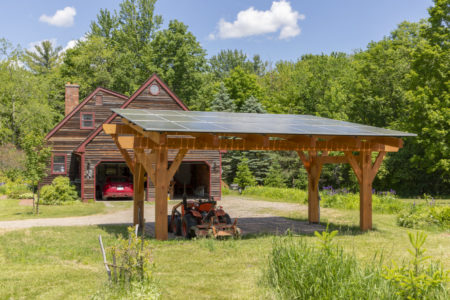
Solar modules can be installed by being ground mounted on poles or lumber, awning mounted on walls, or rail mounted on flat or pitched roofs. The roofs can be asphalt shingled or made of steel.

What does a site need to install a PV system?
The roof or ground area should be south facing and typically unshaded between the hours of 9am to 3pm. The modules should be tilted 42°, ideally, but 20° to 55° is fine.

How do PV modules turn the sun’s energy into electricity?
The modules collect the sun’s energy and transform it into a direct current (DC). The DC flows to an inverter which converts the DC to an alternating current (AC), which flows into your electrical service panel from where it supplies power to your home or office. If you produce more energy than you consume it is automatically re-routed to your utility’s grid and sold to them at the current retail rate.

What is Net-Metering?
PV generation and purchases from the electric utility are “netted out” automatically. This can slow down the utility’s meter or even spin it backwards. If the PV system is producing more electricity than is being consumed, the meter spins backwards, and the excess electricity is sold back to the utility at the retail rate. Central Hudson will now permit most customers with fewer than 15 kilowatts of PV to net meter.

What are some of the financial incentives for installing a PV system?
New York State is strongly supporting the installation of PV systems.
· Sales tax exempt as capital equipment (ST-124)
· Systems under 50kw can qualify for NYSERDA (New York State Energy Research and
Development Authority) rebates of $4,000 to $4,500 per kw (PON-716)
· NYSERDA Energy Smart Loan Fund can reduce borrowing costs by 400 basis
points (4%)
· Systems under 10kw on residences can qualify for an income tax credit of $1,500
per kw up to $5,000 (IT-255)
· 30% Federal tax credit for commercial installments
· $2000 Federal tax credit for residential installments
· State rebates can total 60% of a PV system’s total cost!

What are some important facts about the Hudson Valley regarding power and environmental concerns?
At the Indian Point Nuclear Power Plant, located on the Hudson River, hot water which is used as a coolant for the reactors is dumped into the River. This kills millions of fish annually and it is predicted that the plant will produce approximately 2,000 tons of radio-active waste by the year 2030. 
Also, some of the worst air quality in the nation is located in the Hudson Valley as a result of coal-fired power plants located along the river. It has been proposed for New York, mostly along the Hudson River, in the New York City harbor, and on Long Island, to install 65 new power plants which will further desecrate the quality of air.

 
“Think Global…Act Local!”

JL Websites, Inc